
Zara, Abuja — before everything changed.
You know exactly what tonight will look like.
He will come home. You will ask how his day was. He will say "fine." You will put food on the table. He will eat, mostly looking at his phone. You will try to say something that starts a real conversation. He will give you a sentence. Maybe two. Then he will move to the sitting room, and you will clear the plates, and later you will both get into bed. And you will lie there in the dark, close enough to hear each other breathe, and it will feel like the loneliest place in the world.
It has been this way for so long now that you have stopped counting the days. You have started measuring time differently. How many weeks since he touched you first, without you reaching for him. How many months since he looked at you the way he used to. How many Sunday mornings you have smiled and shaken hands at church and said "we are doing well, God has been faithful" and then driven home in silence and stared out of the window with your sunglasses on so he cannot see your eyes.
Am I imagining this? Or is something genuinely gone between us?
You have tried. God knows you have tried. You dressed up for him. You cooked his favourite food. You gave him space, weeks of it, telling yourself he is under pressure at work, that men decompress differently, that it will pass. You bought things you are embarrassed to describe. You prayed. You fasted. You made yourself quieter, softer, easier to be around. You stopped bringing up things that might cause any tension. You rearranged yourself entirely to take up less space in your own home. And still. Nothing.
Nobody around you knows. That is part of what makes it so suffocating. You cannot tell your mother because she will say to pray harder and submit more. You cannot tell your friends because the story will travel. You cannot tell your pastor, not the whole truth, not the part that keeps you awake at 2am thinking does he even see me anymore?
And the worst part, the part you have never said out loud to anyone, is that you are not even angry. You are just exhausted. And quietly terrified that this is simply who your marriage has become. Two people sharing a house. No bridge between them.
You have searched Google at midnight. "Why has my husband stopped being affectionate." "My husband ignores me what do I do." "How to reconnect with a distant husband." You read articles from American therapists telling you to schedule date nights and use "I feel" statements. You closed the tab feeling more invisible than when you opened it.
You have stood in front of the mirror and looked at yourself and thought: Is this really all that is left of me? Is this who I have become? You have stopped initiating anything because the quiet rejection of reaching toward someone who does not reach back is a specific kind of pain that starts to feel worse than just not trying.
You are performing fine. You are performing mother. You are performing wife. You are performing colleague and daughter and friend and Christian woman. And inside all of that performing, the real you, the woman who married that man and chose him and believed in that life, she is sitting quietly in a corner. Waiting for someone to notice she is still there.
Drop everything you are doing now and listen to every word I am about to say.
Because I'm about to share with you a simple 21-day method that changed everything for me.
There is a kind of wisdom that does not come from books or seminars. It is passed quietly, from an older woman to a younger one, in the corner of a compound at a wedding, in a whisper over a pot of soup, in a long look across a room that says I have been exactly where you are standing. It is the kind of knowledge that does not have a YouTube channel. It does not trend anywhere. It is carried in the lives of women who have loved distant men back to warmth, who have tended the cold embers of marriages until the fire came back, and who understand that the way to move a man is never to push him, but to shift something so completely that returning to you becomes his own idea.
I know this because it was passed to me. At a moment when I had run completely out of everything. Patience. Ideas. Hope. The will to keep pretending.
But I am getting ahead of myself.

Zara today — same woman, completely different marriage.
Emmanuel and I met at a corporate event in Abuja in 2015. He was the kind of man who remembered things, not just your name, but the small things you mentioned in passing. What you ordered. What made you laugh. Three weeks after we met he called me on a Tuesday evening just to say: "I remembered you said your favourite drink was zobo and cold. I just passed someone selling it and I thought of you."
That was the man I married. The man who noticed me before I could notice myself.
After our first child, things were still warm. Tiring, yes, but still us. Still good. It was after our second child arrived that something began to shift. Quietly. The way a tide goes out so gradually that you do not notice the water receding until one day you look down and you are standing on bare sand.
There was no fight. No incident I could point to. Just a slow pulling away. He stopped reaching for my hand in the car. He stopped asking about my day with any real curiosity. He started spending evenings in the study with his laptop, and I told myself it was work pressure. I gave him space. I was patient. I was understanding.
I gave him so much space that we ended up living in the same house like two people who had simply decided to coexist politely.
The emotional cost was something I was not prepared for.
I stopped feeling like a woman in the way that matters. I mean, I still woke up, bathed, dressed, did my hair. I functioned. But there is a particular kind of aliveness that comes from being truly seen by your husband. From having someone look at you like you are still the best thing that ever walked into their life. That was gone. Completely.
I stopped initiating anything between us because the quiet rejection of reaching toward someone who does not reach back starts to feel worse than just not trying at all. I stopped looking at myself in the mirror for longer than necessary. I performed happiness at church every Sunday. Emmanuel in his agbada, me in my aso-ebi, children between us, the perfect Abuja family. People greeted us warmly. "You people are looking so good o." I smiled and said thank you. Inside I was screaming.
I cried in our bathroom. With the shower running so the children could not hear.
The breaking point came on our wedding anniversary.
I had arranged everything. I asked my sister to take the children for the night. I cooked. I dressed in the wine-coloured off-shoulder dress Emmanuel had always loved on me. I lit candles. I sat and waited.
He came home. He looked at the food and said, "Oh, it is our anniversary." Not warmly. Just noting it the way you note a meeting on a calendar. He ate. He thanked me. He said he was exhausted and went to bed by 9pm.
I sat alone at that table with the candles burning down, in the dress he used to love, and I understood something I had been avoiding for a long time. This was not a phase. Something was genuinely broken. And I did not know how to fix it. And I was running out of strength to keep trying.
The next day I called my Aunty Bimpe, my mother's younger sister, a woman who has seen everything and says exactly what she means. I told her everything. She listened without interrupting, which for Aunty Bimpe is remarkable. And then she was quiet for a moment.
Then she said: "Zara. The problem is not that he stopped loving you. The problem is he forgot you were there."
I did not fully understand what she meant. But that line stayed with me.
I tried everything I could think of. Nothing moved him.
I bought three relationship books from a bookshop on Lagos Island. Good money. Read every page. They were full of advice that assumed a Western marriage between two people comfortable having open emotional conversations on a Tuesday evening. That was not my reality.
I watched hours of YouTube relationship advice from American therapists. They kept saying things like "schedule a weekly check-in" and "use this communication framework." Emmanuel would have looked at me like I had grown a second head.
My friend suggested a couples getaway. We went to Ibadan for our anniversary, a hotel I had planned and booked. He was physically present the entire weekend. His mind was somewhere else. Saturday afternoon he spent on his phone by the pool. I sat beside him in my swimsuit feeling like a fool.
Another friend said to give him space. "Men just need room to breathe." I tried it. Six weeks of maximum space, initiating nothing. The distance did not shrink. It grew. We became even more like strangers.
I bought expensive lingerie twice. The first time he was already asleep. The second time he glanced up, said he was tired, and had an early morning. I took it off in the bathroom and folded it at the back of the wardrobe where I knew I would never look at it again.
I spoke to our pastor in general terms. He prayed with me, which I was grateful for, and then he said the solution was to submit more and cook more. I was already doing both. My submission and my jollof rice had not brought my husband back.
I was out of ideas. I was out of hope. And I was very, very tired.
Then came my cousin Adaora's traditional wedding in Abuja.
I had travelled across town in my best aso-ebi. Gele perfectly tied. Face done. I danced when the music played. I smiled when the cameras came around. I sprayed money and ate small chops and laughed when the other women laughed. I was performing so hard that afternoon I could feel the weight of it sitting in my chest.
And then I saw them.
A couple near the front of the hall. The man had his arm loosely around the back of his wife's chair, not possessively, just there. Easy. Like a habit so old he did it without thinking. And she had leaned into him, slightly, the way you only lean into someone when you feel completely safe with them. They were not doing anything dramatic. They were just together. Present to each other in a room full of noise and celebration.
I watched them for a moment longer than I should have. And then I looked away because I could not keep watching. There was something cracking open inside me that I had been holding shut for months.
I tried to catch Emmanuel's eye across the room, to have that same wordless moment of just we are here together. But he was talking to someone on the other side, laughing at something on his phone, and he did not look up.
I excused myself. Walked through the compound toward the back, away from the band and the noise and the dancing. I went around the side of the wall and stood there and let myself cry. Properly. The kind of crying you cannot do at home because your children might hear.
I had been trying so hard. Dressing up. Cooking. Praying. Giving space. Lingerie at the back of the wardrobe. Books from Lagos Island. Couples trips. Six weeks of silence. I had tried every single thing I could think of and I still could not find the door back to my own husband.
I wiped my face. Breathed. And then I turned around.
There was a woman sitting on a plastic chair in the corner of the compound, fanning herself slowly with a church programme. Small woman. Sharp eyes. Grey-streaked hair pinned neatly. She looked at me for a long, quiet moment.
Then she said: "The way you were smiling in there. I know that smile. I wore it myself for three years. Sit down."
Her name was Mrs. Nadia Adkins. Sixty-five years old. Retired marriage counsellor. Thirty-four years of practice across Abuja, Lagos, and Port Harcourt. I found out later that she was known in her community as the woman whose husband still opens car doors for her after forty years of marriage.
I sat beside her on an empty chair. I did not know this woman. But something about the way she had said I know that smile made pretending feel pointless.
So I told her. All of it. Emmanuel. The distance. The anniversary. The lingerie at the back of the wardrobe. The couple near the front of the hall that I had been watching like they were living a life I used to have. And then trying to catch Emmanuel's eye just a moment ago, just for a second of connection, and him not looking up.
She listened without expression. Not coldly. Just completely without judgment, the way someone listens when they have heard a thousand versions of the same story and still take each one seriously.
When I finished she was quiet for a moment. Then she asked me one question.
"When you try to reach him, what exactly do you do?"
I thought about it. I initiate conversation. I suggest things we could do together. I try to get him talking. I ask what is wrong. I try to be warmer. I dress up. I cook things he loves. I try.
She nodded slowly. "That is the problem. You are going toward him. And he moves away. So you go toward him more. And he moves further. You are in a cycle. And you are the one powering it."
I did not understand at first. I said, but what else am I supposed to do? I cannot just do nothing.
She smiled. "I did not say do nothing. I said stop going toward him. There is a difference."
She explained it to me slowly, in the shade of that compound, with the band playing through the wall. She said that most wives try to pull a distant husband back by pursuing him. Initiating. Asking. Trying. Begging. And this approach almost always fails, because a man who has withdrawn does not respond to pursuit. He responds to atmosphere. He responds to the feeling of a home. He responds to a woman who is so quietly, so securely herself that returning to her becomes his own idea, his own desire, his own move.
She shared with me a specific set of daily actions. Small, deliberate things done consistently over 21 days. Not tricks. Not performances. A method built on attachment psychology and the quiet relational wisdom she had observed over three decades in the marriages that lasted, and the ones that did not.
The way I greeted Emmanuel when he came home. The way I occupied space in our house. The way I spoke and stopped speaking. The way I reintroduced physical warmth without any demand or pressure behind it. The specific words for the moments I always froze in. And the small physical signals, things he would do without even realising, that would tell me the shift was happening before he ever said a single word about it.
I sat with Mrs. Adkins for nearly an hour. When I stood to go back inside, she took my hand and held it briefly. "Twenty-one days," she said. "Trust the quiet work."
I almost laughed. It sounded too simple. Too quiet. I wanted something dramatic. Something that would force a reckoning. What she was describing sounded almost like just living differently in my own home.
But I had tried everything else. So.
The first three days, I noticed nothing different.
I followed the daily actions exactly as she had written them for me, on two pages torn from a small notebook she always carried. I greeted him differently. I occupied space differently. I stopped filling every silence. I stopped reaching. I returned to tending to myself properly, not as performance, but because I had genuinely stopped.
Day 3 I almost quit. I sat at the kitchen table after the children were asleep, looked at those handwritten pages, and thought: this is not doing anything. Nothing has changed. I am wasting time.
I stayed with it.
Day 6.
Emmanuel came home. I greeted him the way Mrs. Adkins had shown me, warm but brief, and then returned to what I was doing. I was reading on the sofa. He went to the kitchen, got water, came back. And then he sat down beside me. Without his phone.
He did not say much. But he sat close enough that our arms were touching. And he did not move away.
We sat like that for maybe twenty minutes. He put the television on. We half-watched something. It was nothing. It was everything. It was the first time in I do not know how many months that I did not feel like a ghost in my own sitting room.
I excused myself to the bathroom. And I stood in front of the sink and cried. Not from sadness this time.
By Day 14, Emmanuel had started texting me during the day. Small things. A funny video. A question about my afternoon. Nothing dramatic. But he was thinking about me while he was at work. That had been absent for so long that when I saw his name on my screen with something that was not logistics, I held the phone to my chest.
By Day 21, we were driving to church on a Sunday morning. Children in the back. A normal morning. And without looking at me or saying anything, Emmanuel reached across and took my hand. He held it the entire drive. Without a word.
I looked out at the Abuja morning and thought: there you are. There we are.
Day 19. I want to tell you specifically about Day 19.
That evening, Emmanuel turned off the television, looked at me, and said:
I looked at this man I had been lying next to in silence for so long, this man I had cried about and prayed over and nearly given up on, and I did not tell him I had been following a 21-day system. I did not explain anything.
I just smiled and said: "I missed you too."
Two other women from that same wedding used this method. I want to tell you about them.
Adaeze, from the bride's side, forty years old, married twelve years. Her husband had not been physically affectionate in eight months. I shared Mrs. Adkins' method with her the week after the wedding. By Day 11 she messaged me on WhatsApp: "Zara. He came home early yesterday. He brought me zobo and small chops from the roadside seller near our estate. I was not expecting it. I had to pretend I had something in my eye."
And Funmi, a teacher from Ibadan. Her husband had become so checked out they barely spoke beyond logistics. She followed the method for all 21 days. On Day 18 she sent me a voice note, crying the good kind of crying, because her husband had asked her that morning what she wanted to do on the weekend. Just that. What did she want to do. After months of not being asked anything.
"He asked me like my answer mattered," she said in the voice note. "I forgot what that felt like."
After sharing Mrs. Adkins' method with those two women at the wedding, something I had not planned started to happen. Word spread, quietly, the way good things spread between women who trust each other. Other wives began reaching out. First five. Then fifteen. Then over forty. All with the same story. The same exhaustion. The same desperate quiet.
I shared what I had. Handwritten notes. Voice notes. Long midnight messages. But I could not keep up. And I could not keep sending something so incomplete. These women deserved everything, step by step, exactly as it had worked for me.
So I put everything inside one simple guide. The full 21-day system. The daily actions. The scripts. The techniques. Exactly what to say, what to do, and how to know it is working.
Introducing…
Bring Him Back: The 21-Day Step-by-Step Guide for Wives Whose Husbands Have Emotionally Disconnected, Stopped Being Intimate, and Pulled Away
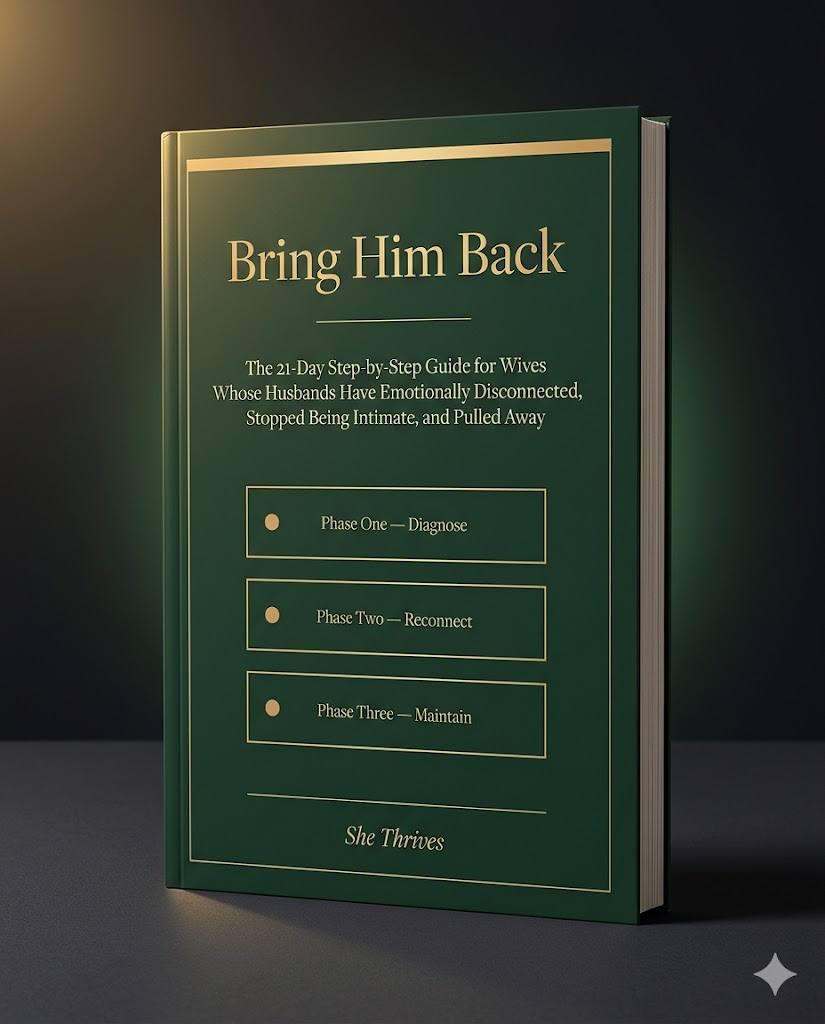
Inside this guide, you will discover:
Not all emotional distance looks the same. Treating the wrong type with the wrong approach can deepen the gap rather than close it. This section alone will change how you see what is happening.
No complicated frameworks. No awkward conversations. One action per day, consistently, that quietly changes the emotional environment of your home from the inside out.
The first seven minutes after a man enters his home sets the emotional tone for the entire evening. Most wives are unknowingly triggering his walls in those first seven minutes. This shows you how to do the opposite.
Mrs. Adkins always said: a man withdraws from tension and returns to peace. This section shows you how to shift the atmosphere of your home in ways so subtle he cannot name what has changed, only that he wants to stay.
This is not about performing or putting on a show. This is about becoming so quietly, completely yourself that he remembers why he wanted to be in the same room as you in the first place.
The method works before he says a single word. You will notice small signals — a glance held a second longer, a moment of closeness he initiates. This tracker helps you see the progress so you do not give up on Day 3 the way I almost did.
Every woman following this method will have at least one hard day. A day when everything in you wants to confront him or shut down completely. This protocol tells you exactly what to do so you do not undo the quiet work you have already done.
Real Women. Real Results.
Comments from women who have used the Bring Him Back method
I go honest with una — I was very skeptical. My husband had been distant for over a year and I don try everything. My sister sent me this guide and I said make I just try am. By Day 8, my husband surprised me — he came home with plantain from the roadside seller that I love and he said "I know you like this one." Simple thing but I had to enter bathroom to collect myself because he had not thought about small things like that in so long. By Day 21, e don change completely. We are talking again. Properly talking. I am grateful for this guide, I no fit explain am.
The First 7 Minutes Technique alone was worth everything. I had no idea the way I was greeting my husband when he came home was making things worse. I changed just that one thing on Day 1 and by the end of that first week something had already shifted. He started asking me how my day went — he had not asked in months. This thing is real. Do not sleep on it.
What I appreciate most is that this is not Western advice. Na our reality this woman is talking about. She understand the church pressure, the family pressure, the shame of not being able to tell anybody. When she talked about performing fine at Sunday service — I almost closed the page because e hit me too close. The method is practical. Day by day. I am on Day 17 and my husband reached for my hand this morning for the first time in I do not know how long. We have a long way to go but we are moving. Thank you Zara.
My husband and I had become roommates for almost two years. People from outside thought we were the perfect couple — two good jobs, fine house, lovely children. Inside the house was just silence and politeness. I followed this guide for 21 days. On Day 19 he sent me a message in the afternoon that just said "thinking of you." He has not done that since we were dating. I am a 44-year-old woman and I read that message and smiled like a teenage girl. This guide does what it says.
I just want to say — the Emergency Protocol saved me on Day 12. I was ready to go and confront my husband and say some things that would not have helped anything. I opened the guide, read that section, and I stopped myself. I did what it said to do instead. The next morning he made breakfast for me. He never makes breakfast. I do not know what that section saved but I believe it saved a lot. Buy this guide. Follow every step. Trust the process.
Just So You Know… Putting this Guide Together Cost Me Over ₦147,000.
This was not a quick project. Here is exactly what went into building this resource for you:
- → Three months of research and counsellor interviews across Lagos and Abuja, speaking directly with marriage counsellors, documenting what actually works in our cultural reality, and verifying every approach against real outcomes
- → Testing and refinement across 40+ real women, tracking their progress day by day, adjusting the method where needed, and making sure the daily actions produce consistent results before packaging everything
- → Professional editor and proofreader fees, to compile everything clearly, remove the technical jargon, and make sure even a woman reading this at midnight on her phone can understand and apply every single step
- → PDF design and professional formatting costs, to make sure the guide looks as polished and readable on your screen as it deserves to, with a layout that is easy to follow day by day
- → Website setup, hosting, and digital production costs, to make sure you receive your guides instantly and securely the moment your payment is confirmed
A fair price for this guide would be just ₦20,000. But today, for the first 30 women who take action right now, the price is simply this:
🔥 This Discounted Offer is ONLY For the First 30 Women Who Order Today. So Hurry! 🔥
🔒 Secure checkout via Selar | Pay by card, bank transfer, or USSD | Instant digital access after payment
Here Is What Is Happening Right Now…
47 women have already taken this discount today.
Only 3 bonus spots remaining.
Once those 3 spots are gone, the bonuses will be sold separately at full price.
🔒 Secure checkout | Instant access after payment
WAIT! You Also Get These FREE Bonuses If You Are Among The First 30 Women Today…
These two guides are sold separately. But if you order today, they are completely free.
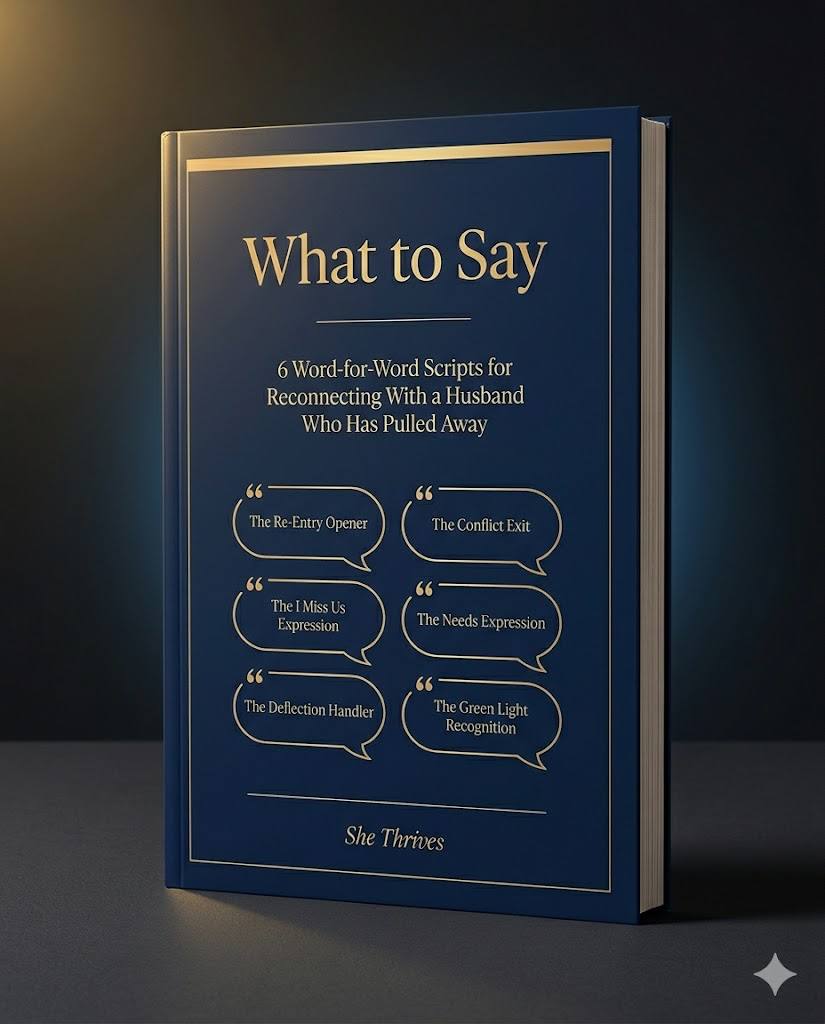
What to Say
You know the moments when you open your mouth and nothing comes out — or the wrong thing does? This guide gives you 6 word-for-word scripts for exactly those moments:
- The re-entry conversation
- The deflection handler (when he shuts you down)
- The conflict exit (when things are about to escalate)
- The needs expression (saying what you need without pushing him away)
- The green light recognition (knowing when he is ready and what to say)
Value: ₦7,500 — FREE today
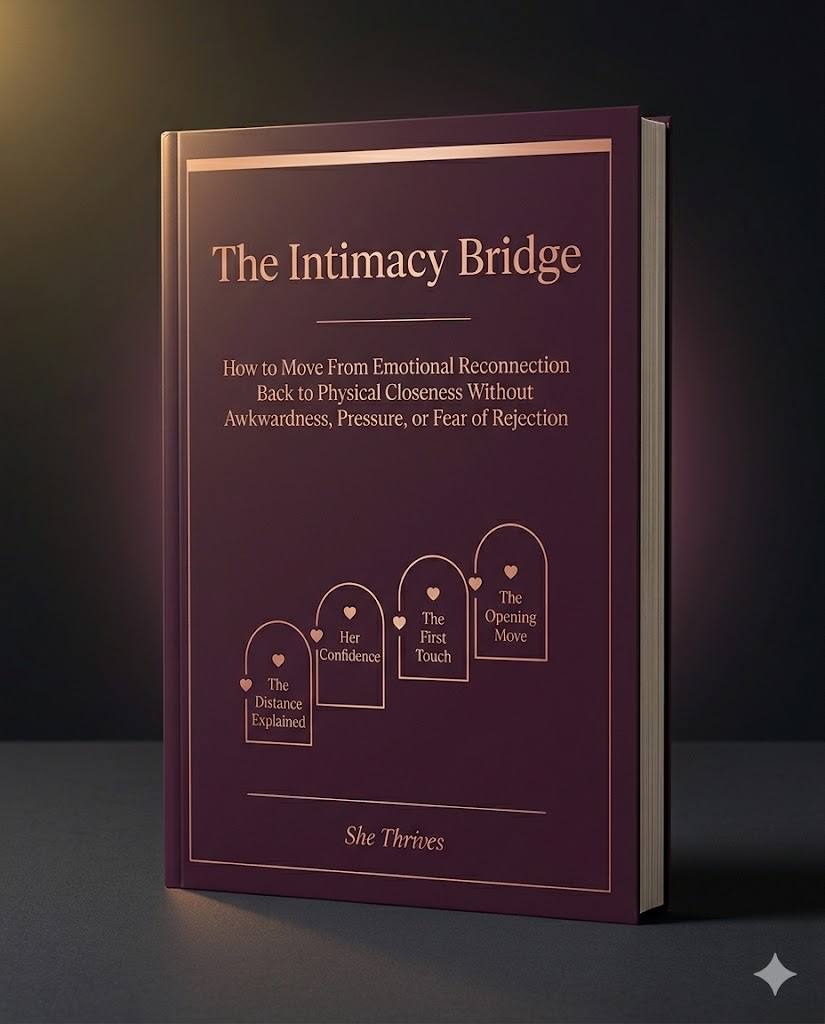
The Intimacy Bridge
Emotional reconnection and physical closeness are not the same thing. Moving from one to the other takes care. This gentle, step-by-step guide shows you how to bridge that gap without awkwardness, pressure, or fear of rejection.
Including the one opening move that lets him choose to come closer without you ever having to ask, beg, or feel exposed.
Value: ₦7,500 — FREE today
Everything you receive today — ₦9,800 for the complete package.
🔒 Instant access | Selar secure checkout | Card, bank transfer, or USSD
My Bold, Risk-Free Promise to You
Still feeling unsure? I completely understand. Which is why I am making you a bold, risk-free promise:
"Use it for 21 days. Follow the daily actions. If you see zero change in your husband's behaviour — not a single shift, not one moment of warmth — I will refund every penny. No questions. No explanation needed."
You have nothing to lose. You have your marriage to gain.
Yes, I Am Ready — Get Instant Access for ₦9,800More Women. More Results.
Every story is different. Every outcome is real.
I don try everything wey YouTube and marriage books tell me to do. Nothing work. My husband was so checked out I started to wonder if he was planning to leave. Then my colleague showed me this guide and I said make I try last thing before I confront him. Day 6 he came and sat beside me and started gisting me about his office — just talking, the way he used to talk to me before. I just dey look at him like, is this real life? This guide is real. Follow every single step.
What I love about this guide is that it respects our culture. It does not tell you to do things that would make your husband look at you like you have gone mad. Everything in it makes sense for an African home and our reality as women. It is practical. It is quiet. And it works. My husband reached for my hand at the dinner table on Day 16. After 14 months of nothing.
Zara — I finished Day 21 yesterday and I am sitting here crying happy tears. My husband, the same man who had not properly looked at me in months, planned a dinner at home for just the two of us last weekend. He cooked. He put candles on the table. My husband who does not cook. I do not know what shift happened inside him but this method did something real. I was ready to ask for a separation before I found this page. Please keep sharing this with women. We need it.
The part about the 4 Disconnection Types completely changed how I understood my husband. I had been treating the wrong type and making things worse without knowing it. Once I identified which one applied to us and started the right daily actions — the shift was faster than I expected. Day 9 he asked if we could pray together before bed. We had not done that in so long I almost did not know what to say. This guide sees the problem clearly.
I have been married for 11 years. I thought what me and my husband had was just what long marriage feels like — that warmth and connection was for newlyweds and after a while you just become companions. This guide showed me that is not true. By Day 21 my husband said something he had not said in years. He said I make him happy. Just that. But I cried for ten minutes after. ₦9,800 is nothing for what this gave back to me. Nothing at all.
You Have Two Options Right Now.
Option 1 ✓
Take action right now. Get Bring Him Back. Start the 21 days tonight. Use the daily actions, one at a time, exactly as they are written. Watch your husband. Watch the small signs. The shifts. The moments that come before words do. Feel chosen again. Feel seen again. Come home to yourself.
Option 2
Close this page. Go back to performing fine. Keep crying in bathrooms nobody can hear. Keep lying awake beside a man who feels like a stranger. Keep waiting for something to change on its own.
Maybe it will. But you have been waiting for a while now. And you know how that has been going.
The choice is yours. But the 3 remaining bonus spots will not wait.
Every hour, more women are claiming their copy. Do not let this be another thing you almost did.
🔒 ₦9,800 one-time payment | Instant digital access | 21-day money-back guarantee
Questions? Email us at hello@shethrivesblog.com
Payment is processed securely by Selar. Access is delivered instantly to your email after payment.
This guide is a digital PDF — compatible with all phones, tablets, and computers.
Share Your Experience